
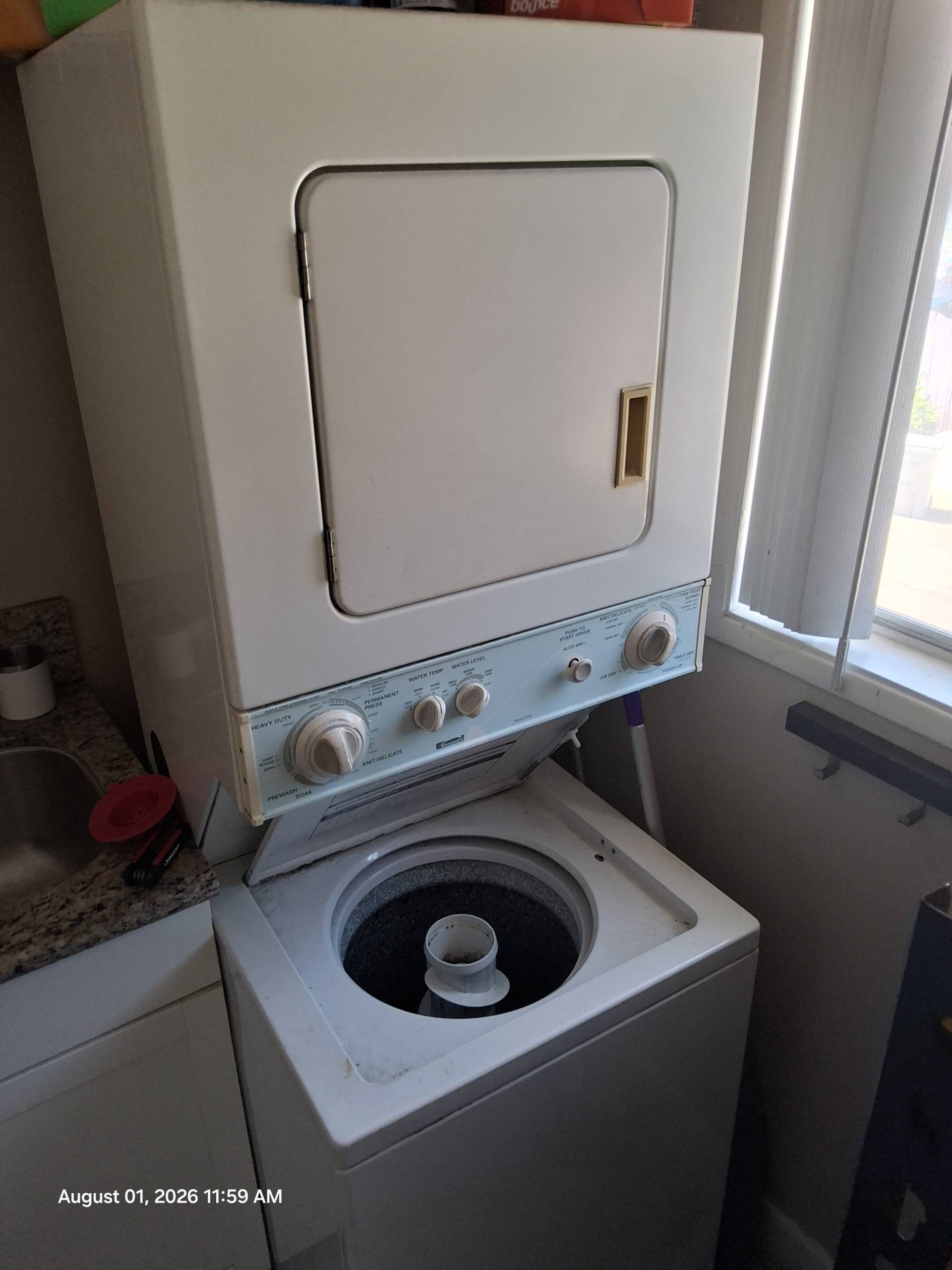
An LG washing machine that fills with water but does not agitate has completed only part of the wash cycle. The washer may open the water valves normally and reach the expected water level, yet the drum or agitator remains still when washing should begin. This problem can leave clothes soaking in the tub and prevent detergent from being distributed properly. Several components can cause this symptom, including the drive motor, control board, wiring, rotor or stator assembly, and other parts involved in the wash motion. Identifying the actual cause requires checking how the washer behaves before replacing any components.
The drive motor is one of the first areas to consider. LG washing machines use a motor system to rotate the wash basket during different stages of the cycle. Depending on the model, the washer may use a direct-drive motor or a related motor and rotor/stator configuration. When the motor cannot operate correctly, the machine may fill with water and then stop when it reaches the agitation stage. A failed motor can produce several warning signs. You may hear a humming sound without seeing the basket move, hear clicking or unusual noises, or notice that the washer simply pauses after filling. In some cases, the motor may have an electrical problem, while mechanical damage or worn components can prevent it from generating enough movement.
The control board is another possible source of the problem. The electronic control system determines when the water valves, motor, drain pump, and other components should operate. If the control board fails to send the correct signal to the drive motor, the washer may fill normally but never start agitation. Control board problems can be difficult to identify because other components may still appear to work. The washer can turn on, accept cycle selections, fill with water, and display information normally while failing at one particular stage. A technician may need to test voltage, wiring connections, error codes, and motor operation to determine whether the board is actually responsible.
Wiring and electrical connections should also be inspected. A loose connector, damaged wire, corrosion, or poor connection between the control board and motor can interrupt communication or power delivery. In this situation, replacing the motor or control board without testing the wiring could result in an unnecessary repair. Another possibility is a problem with the rotor or stator assembly on compatible LG direct-drive models. These components work together to create the magnetic force that rotates the motor. Damage or failure in either part can prevent normal drum movement. A technician can inspect the assembly and test its electrical characteristics to determine whether it is functioning within specifications.
Before assuming that the motor or control board has failed, check a few basic conditions. Make sure the washer is receiving stable electrical power and that no circuit breaker has tripped. Confirm that the selected cycle is appropriate and that the door or lid is closing correctly. Some LG models will not continue with the wash process if the door-lock system does not confirm that the door is securely closed. It is also useful to pay attention to what happens immediately after the washer fills. If the machine makes repeated clicking sounds, produces a humming noise, displays an error code, or attempts to move the basket without success, these details can help a technician narrow down the cause.
Avoid repeatedly starting the washer if the motor is humming or struggling to move. Continuing to operate a machine with an electrical or mechanical fault can place additional stress on other components. Unplug the washer before performing any basic inspection, and leave electrical testing or component replacement to a qualified appliance technician. Professional diagnosis is especially useful when the washer fills correctly but consistently stops before agitation. A technician can inspect the motor system, control board, wiring, connectors, rotor and stator, door-lock system, and other related components. Proper testing helps determine whether a repair involves one failed component or a combination of problems.
A washer that fills with water but will not agitate should not be ignored. Without proper agitation, clothes may remain dirty, detergent may not circulate correctly, and the cycle may eventually stop with water still inside the tub. Early diagnosis can also prevent a relatively contained component failure from developing into a larger repair. If your LG washing machine fills with water but will not agitate, contact San Diego Appliance Repair Service for professional appliance repair. A qualified technician can diagnose the problem, identify the failed component, and recommend the appropriate repair for your specific LG washer model. Call San Diego Appliance Repair Service to schedule a service appointment and get your washing machine working properly again.
Contact us
(619) 719-5005
[email protected]