
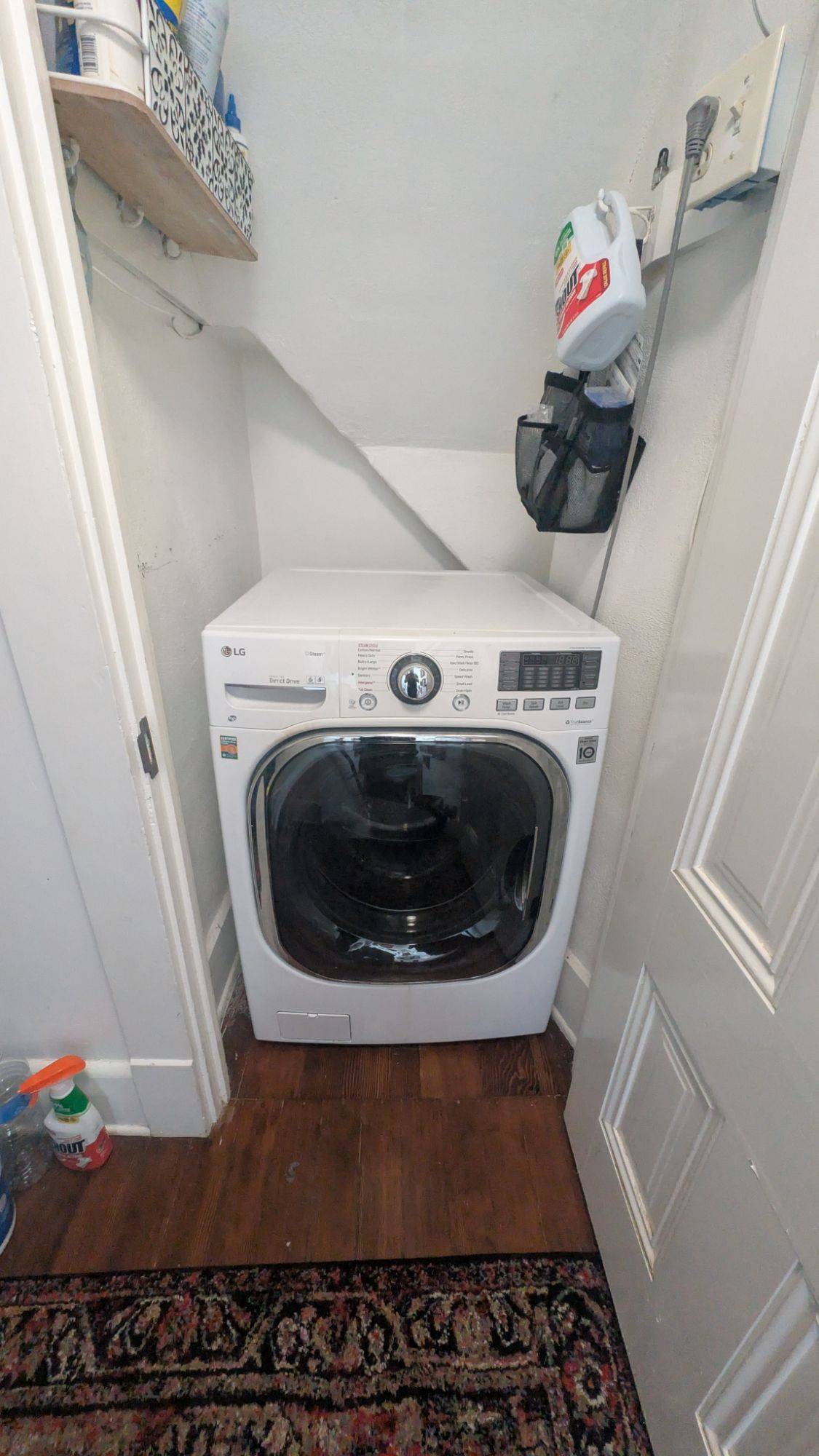
An LG washing machine that changes spin speed unexpectedly may have a problem with its load balancing system, motor speed sensor, or electronic controls. Homeowners might notice the drum accelerating and slowing repeatedly, pausing during the spin cycle, or failing to reach the selected speed. While some speed adjustments are normal, frequent interruptions accompanied by excessive vibration or unfinished cycles may indicate a malfunction.
LG washing machines use electronic controls to regulate drum movement throughout washing, rinsing, and spinning. During the final spin, the appliance gradually increases speed to remove water from clothing. Sensors and control algorithms monitor motor operation and load distribution. When the machine detects conditions that could cause instability, it may reduce speed or attempt to redistribute the laundry.
Load imbalance is one of the most common reasons for unexpected spin speed changes. When clothing gathers on one side of the drum, the rotating assembly becomes unevenly weighted. At higher speeds, this imbalance can produce excessive vibration and place additional stress on suspension components. To limit these forces, the washer may slow down, stop spinning, or rotate the drum in different directions.
Large items such as blankets, towels, and bedding are particularly likely to create uneven loads. A single heavy item may absorb significant amounts of water and become difficult to distribute evenly. Small loads can also cause problems because the washer may have too few items to balance the drum. Adding suitable garments or rearranging the load may help restore normal spinning.
Many LG washers perform several balancing attempts before reaching maximum spin speed. The drum may accelerate briefly, slow down, and rotate again to redistribute clothing. This behavior can be normal when the machine encounters an uneven load. However, repeated attempts that prevent the cycle from finishing may indicate excessive vibration, suspension wear, or another mechanical problem.
The washer’s installation can affect load balancing performance. If the appliance is not level or its feet are not firmly supported, the cabinet may move during spinning. An unstable floor can increase vibration, particularly at higher speeds. Checking the leveling feet and ensuring the washer stands securely can help eliminate installation-related problems.
Worn suspension components may also interfere with spin stability. Front-loading LG washers commonly use shock absorbers and suspension springs to control tub movement. If these components deteriorate, the tub may move excessively during acceleration. The control system may respond by reducing spin speed or repeatedly attempting to balance the load.
Top-loading models use different suspension arrangements, often including suspension rods. Damaged or weakened components can allow the tub to shift excessively during spinning. Because LG washer designs vary, technicians must identify the correct suspension system before recommending replacement parts.
A malfunctioning Hall sensor is another possible cause of irregular spin speed. On LG direct-drive washer models equipped with this sensor, it monitors motor rotor position and provides feedback to the electronic control system. The control board uses this information to coordinate motor operation and regulate drum speed.
If the Hall sensor sends incorrect or intermittent signals, the washer may struggle to determine motor position accurately. This can cause unexpected speed changes, interrupted spinning, or difficulty starting the motor. Some models may display a motor-related error code when the control system detects abnormal feedback.
Hall sensor problems can result from electrical failure, damaged wiring, or loose connectors. Moisture exposure and vibration may also contribute to connection problems over time. A technician can inspect the sensor circuit and evaluate its signals using the diagnostic procedures specified for the washer model.
Not every LG washing machine uses the same motor feedback arrangement. Some models rely on different sensing methods or integrate motor position detection into other components. Therefore, an unexpected spin speed change does not automatically mean that a Hall sensor requires replacement.
The electronic control board may also contribute to inconsistent spinning. This component processes information from motor feedback systems, water level sensors, and load balancing algorithms. If the board receives incorrect data or develops an internal fault, it may issue inappropriate motor commands or interrupt the spin cycle.
Motor wiring problems can produce similar symptoms. Loose connectors, damaged insulation, or intermittent electrical connections may interfere with motor control. In some cases, the drum may accelerate normally before slowing suddenly or stopping. Professional electrical testing can help distinguish wiring faults from sensor and control board failures.
Drainage problems should also be considered. A washer may restrict or delay high-speed spinning when excess water remains inside the tub. A clogged drain filter, obstructed hose, or malfunctioning drain pump can prevent proper water removal. Homeowners may notice wet clothing, standing water, or unusually long cycles alongside inconsistent spin speed.
Excessive detergent can contribute to spin problems as well. Too much detergent may create heavy suds that interfere with water removal and load sensing. Some LG washers respond by extending rinsing or adjusting drum movement. Using the recommended amount of high-efficiency detergent can help prevent unnecessary cycle interruptions.
Homeowners can begin troubleshooting by redistributing laundry, checking the machine’s stability, and selecting an appropriate load size. Inspect accessible drain filters according to the owner’s manual and confirm that the drain hose is not kinked. Recording any displayed error codes can provide useful information for professional diagnosis.
If the washer makes loud banging noises, moves excessively, or repeatedly fails to complete spinning, stop using it until the cause is identified. Continued operation with damaged suspension components or unstable drum movement may lead to additional mechanical damage.
Professional LG washing machine diagnostics may include inspecting suspension components, testing motor feedback circuits, checking Hall sensor operation where applicable, and evaluating the electronic control board. Technicians can also examine drainage performance and verify whether the appliance reaches its intended spin speeds under appropriate conditions.
An LG washing machine that changes spin speed unexpectedly may have an unbalanced load, worn suspension components, defective motor feedback sensor, or electronic control problem. San Diego Appliance Repair Service provides professional LG washing machine diagnostics and repairs, including Hall sensor testing, suspension inspections, and motor control troubleshooting. Contact San Diego Appliance Repair Service today to schedule professional LG washer repair and restore consistent, reliable spin performance.
Contact us
(619) 719-5005
[email protected]