
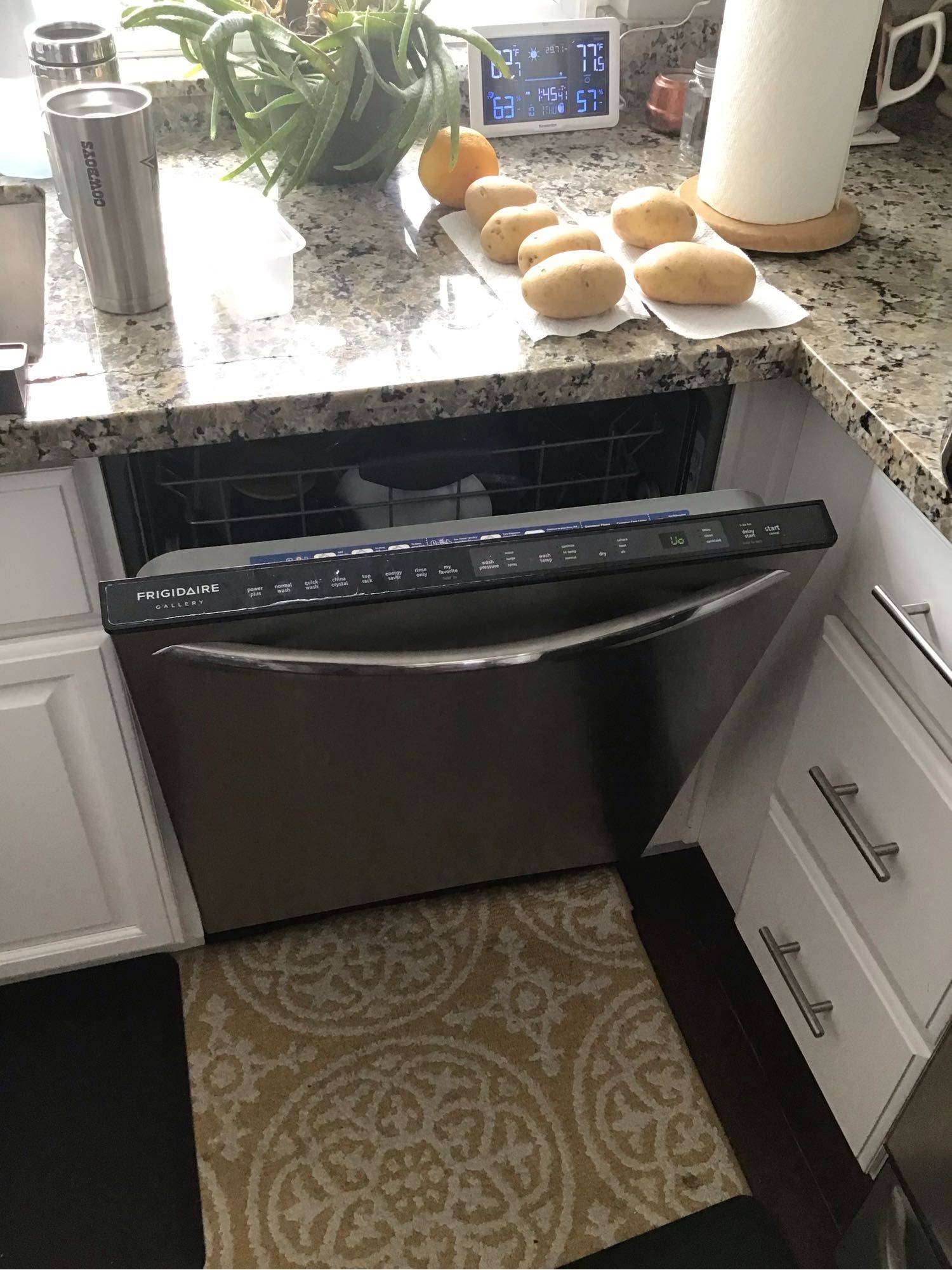
A Frigidaire dishwasher that fails to heat water can leave dishes greasy, cloudy, or covered with food residue even after a complete wash cycle. You may also notice that detergent does not dissolve properly, glasses look dull, or dishes remain unusually wet. These problems often suggest that the dishwasher is not reaching the temperature needed for effective cleaning. A damaged heating element or faulty temperature sensor could be responsible, although several other components can produce similar symptoms.
Most Frigidaire dishwashers depend on hot water entering from the household supply, while certain wash settings use an internal heating system to increase or maintain water temperature. When this system stops working correctly, the dishwasher may continue filling, spraying, draining, and completing cycles without delivering satisfactory results. Understanding how the heating components operate can help explain why your Frigidaire dishwasher is washing with cold water and when professional repair becomes necessary.
The heating element is an important part of the dishwasher’s temperature control system. Depending on the model, it helps raise water temperature during selected cycles and supports heated drying. Over time, repeated heating cycles, mineral deposits, electrical faults, or corrosion can damage the element. If the heating circuit fails, the dishwasher may struggle to maintain appropriate wash temperatures. However, cold dishes after a completed cycle do not automatically prove that the heating element needs replacement.
A temperature sensor, sometimes called a thermistor, monitors water temperature and communicates information to the electronic control board. The control system uses these readings to determine when additional heating is required. If the sensor sends inaccurate information, the dishwasher might stop heating too early, extend its washing cycle, or fail to activate the heater when necessary. Sensor problems can resemble heating element failures, which makes accurate diagnosis important before ordering replacement parts.
Another component worth checking is the high-limit thermostat, where fitted. This safety device helps prevent excessive temperatures by interrupting the heating circuit when necessary. A malfunctioning thermostat or damaged connection may prevent normal heater operation. Wiring problems, loose electrical terminals, and electronic control board faults can also interrupt power to the heating element. Because several components work together, replacing the heater without testing the circuit may leave the original problem unresolved.
The household hot water supply should also be considered before assuming an internal appliance failure. Frigidaire generally recommends incoming water around 120 degrees Fahrenheit for effective dishwasher performance. If the water heater is set too low, or cold water remains in the supply pipe, the dishwasher may begin washing below its intended temperature. Running the kitchen faucet until the water becomes hot before starting a cycle can improve initial water temperature.
Wash cycle selection makes a difference as well. Quick wash and energy-saving settings may operate differently from heavy wash or high-temperature options. Some cycles prioritize shorter operation or lower energy consumption, which can affect how warm the dishes feel afterward. Check the owner’s manual for the heating options available on your particular Frigidaire model. A dishwasher that performs normally during one setting but poorly during another may have a cycle-related issue rather than a completely failed heater.
Several warning signs can help identify a possible dishwasher heating problem. Plates may retain oily residue, detergent tablets may remain partially dissolved, and glasses may develop a cloudy film. You might also notice unusually long cycles, inconsistent cleaning, or poor drying performance when heated drying is selected. These symptoms should be evaluated together because clogged spray arms, dirty filters, incorrect loading, hard water, and inadequate rinse aid can create similar complaints.
Before requesting service, check a few accessible items without removing electrical panels. Confirm that the household hot water supply is functioning, review the selected washing program, and make sure the filter is clean. Inspect the spray arms for visible blockages and verify that dishes are not preventing proper water circulation. If cleaning problems continue despite these adjustments, an internal heating or temperature regulation fault becomes more likely.
Professional dishwasher troubleshooting involves examining the heating element, temperature sensor, thermostat, electrical connections, and control system according to the appliance’s model specifications. A technician may test component resistance, inspect wiring damage, and determine whether the control board is operating the heating circuit correctly. These checks require appropriate equipment and electrical safety procedures. Homeowners should avoid accessing energized components or attempting to bypass protective temperature controls.
Ignoring a dishwasher that consistently washes with insufficient heat can result in repeated cleaning cycles, wasted detergent, and additional water consumption. More importantly, dishes may not receive the cleaning performance expected from the selected program. Early inspection can help identify a failing component before additional problems develop. In many cases, the issue can be resolved by replacing the defective part rather than replacing the entire dishwasher.
San Diego Appliance Repair Service provides professional Frigidaire dishwasher repair and diagnostic services for homeowners in San Diego. Whether your dishwasher has a faulty heating element, a temperature sensor problem, or another electrical malfunction, identifying the actual cause is the first step toward reliable operation. If your Frigidaire dishwasher is not heating water properly, contact San Diego Appliance Repair Service to schedule an inspection and get your dishwasher cleaning effectively again.
Contact us
(619) 719-5005
[email protected]