
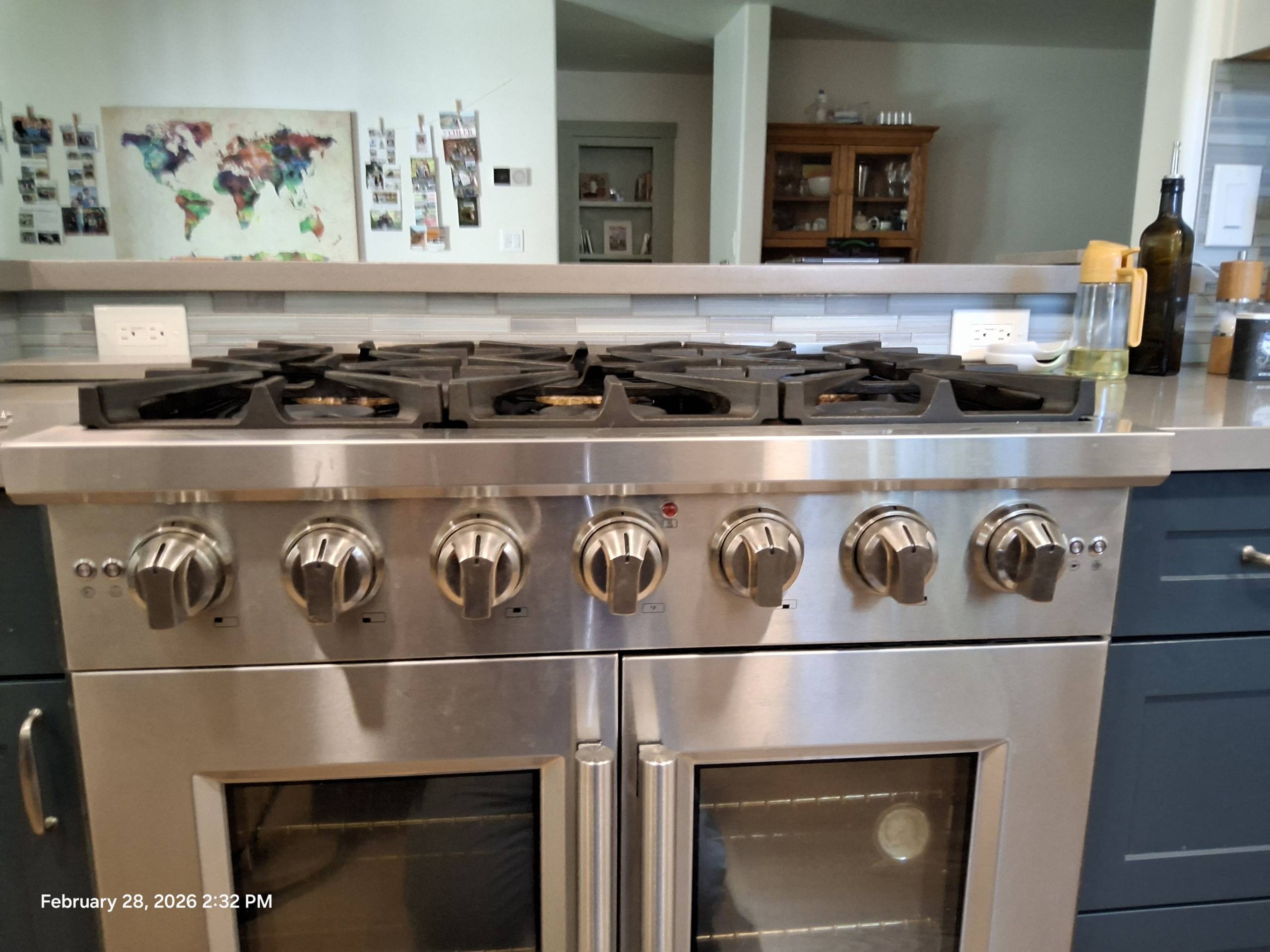
A KitchenAid gas range is designed to provide reliable performance every time you prepare a meal. When you turn a burner knob, the igniter produces a series of rapid clicks to create a spark that lights the gas. Once the flame is established, the clicking should stop immediately. If the igniter continues clicking long after the burner is lit—or even when no burner is in use—it signals a problem that should not be ignored.
Continuous clicking is more than an annoyance. It can indicate a faulty ignition component, moisture inside the burner assembly, or an electrical issue affecting the spark system. In many cases, the root cause is a failing spark module or a defective ignition switch. Identifying the exact source of the problem is essential for restoring safe operation.
How the Ignition System Works
KitchenAid gas ranges use an electronic ignition system rather than a standing pilot light. When a burner knob is turned to the Lite position, electricity flows through the ignition switch to the spark module. The spark module sends high-voltage pulses to the igniter electrode, creating sparks until the burner ignites. Once the knob moves out of the Lite position, the ignition switch stops signaling the spark module, and the clicking ends. If one of these components malfunctions, the spark module may continue firing even though ignition has already occurred.Common Reasons the Igniter Keeps Clicking
Several issues can cause a KitchenAid gas range to click continuously.Faulty Spark Module
The spark module acts as the control center for the ignition system. It distributes electrical pulses to each burner igniter. Over time, internal electrical components may wear out due to age, heat exposure, or power surges. When this happens, the module may continue sending sparks even after the burner has ignited. Signs of a failing spark module include:- Clicking from multiple burners
- Random clicking when the stove is not in use
- Clicking that continues after the flame appears
- Inconsistent burner ignition
Defective Ignition Switch
Each burner knob typically contains an ignition switch. These switches activate the spark module when the burner is turned to the Lite position. If one switch sticks or develops an internal short circuit, it may continuously signal the spark module to produce sparks. Symptoms often include:- Clicking starts as soon as power is connected
- Only one burner seems related to the issue
- Clicking continues regardless of knob position
Moisture Around the Burner
One of the simplest causes of continuous clicking is moisture. Water from cleaning, boil-overs, or excessive steam may collect around the burner cap or igniter electrode. The moisture can interfere with proper sparking and cause the ignition system to keep trying to light the burner. If moisture is responsible:- Remove burner caps.
- Dry all components thoroughly.
- Allow several hours for complete drying.
- Reassemble correctly.
Dirty Burner Components
Food residue, grease, and cooking debris can interfere with ignition. When the burner ports become partially clogged, gas may not ignite immediately. The ignition system keeps producing sparks while waiting for ignition. Regular cleaning of:- Burner caps
- Burner heads
- Igniter electrodes
Misaligned Burner Cap
After cleaning, burner caps can sometimes be installed incorrectly. If the cap does not sit perfectly in place, gas flow becomes uneven and ignition may be delayed. The spark continues clicking until the burner finally lights. Before assuming a major failure, verify that every burner cap sits securely and evenly on its base.Damaged Igniter Electrode
The ceramic igniter electrode generates the spark needed to ignite gas. Cracks in the ceramic insulation, carbon buildup, or physical damage can weaken the spark or cause it to discharge incorrectly. A damaged electrode may produce:- Weak sparks
- Delayed ignition
- Continuous clicking
- Occasional failure to ignite
Wiring Problems
The ignition system depends on multiple electrical connections. Heat, vibration, grease, or rodents can damage wiring over time. Loose connectors or deteriorated insulation may create intermittent electrical signals that confuse the spark module. A technician will inspect:- Wire harnesses
- Connectors
- Ground connections
- Electrical continuity
Why You Shouldn’t Ignore Continuous Clicking
Although the burners may still function, continuous clicking can eventually lead to more serious problems. Potential risks include:- Premature wear of the spark module
- Increased electrical stress
- Reduced ignition reliability
- Burner lighting delays
- Potential gas accumulation if ignition becomes inconsistent
Can You Continue Using the Range?
If the burners ignite normally and the clicking stops after drying the burners, the range may be safe to use. However, if clicking continues continuously, occurs randomly, or prevents proper ignition, disconnect power to the appliance and schedule professional service. Never attempt to bypass or disable the ignition system, as doing so may create a dangerous gas ignition hazard.Preventing Future Ignition Problems
Routine maintenance significantly reduces ignition issues. Helpful maintenance practices include:- Clean burners after spills.
- Dry burner assemblies completely after cleaning.
- Avoid flooding burners with water.
- Keep igniter electrodes free of grease.
- Use surge protection if possible.
- Schedule periodic appliance inspections.