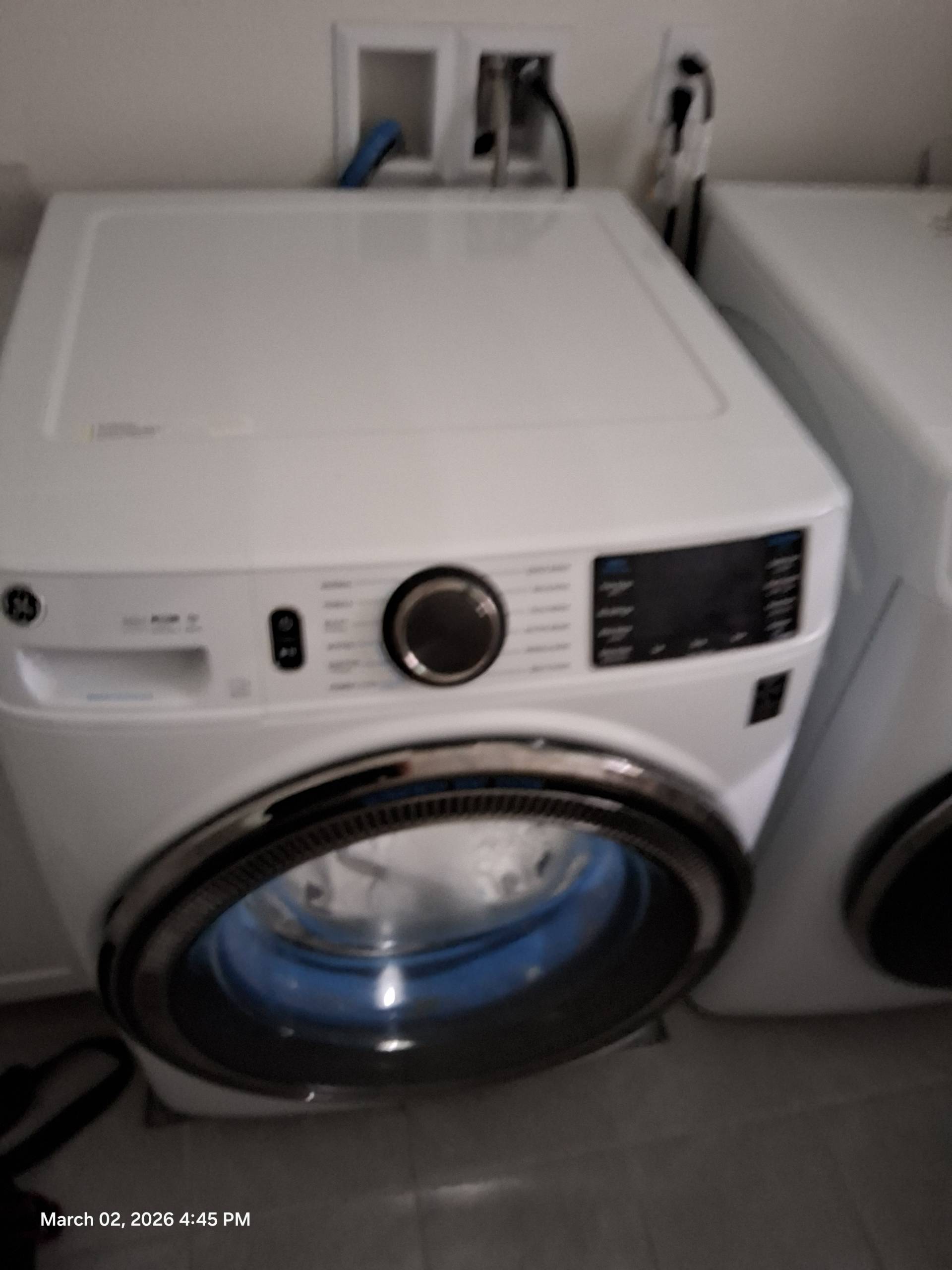
A Hotpoint washing machine drum should rotate smoothly with minimal resistance when the appliance is turned off. If you open the door and discover that the drum is difficult—or impossible—to turn by hand, it’s a strong indication that something inside the washer is preventing normal movement. This issue should never be ignored because the drum, motor, and drive system are designed to work together with very little friction.
One of the most common causes of a drum that won’t spin manually is seized drum bearings. Another possibility is a damaged drum support, often referred to as the spider arm. Both problems require prompt attention to prevent additional damage to the washing machine.
How the Drum Rotation System Works
Inside every Hotpoint washing machine, the stainless-steel drum is mounted within an outer tub. A shaft attached to the drum rotates on heavy-duty bearings installed at the rear of the tub. These bearings allow the drum to spin smoothly during both wash and high-speed spin cycles. The drum is also supported by a metal spider arm that connects the drum to the drive shaft. The motor, drive belt, suspension system, and bearings all work together to keep the drum balanced and rotating efficiently. If any of these components fail, the drum may become extremely difficult to move or stop rotating altogether.Seized Drum Bearings
Drum bearings are designed to withstand years of continuous use, but they eventually wear out. Once water passes through a damaged bearing seal, moisture reaches the bearings and causes corrosion. As rust develops, the bearings lose their ability to rotate freely. Eventually, they may seize completely, preventing the drum from turning by hand. Common symptoms include:- Drum feels locked in place
- Loud rumbling during previous wash cycles
- Grinding or scraping noises
- Increased vibration before complete failure
- Water leaking from the rear of the tub
Drum Support (Spider Arm) Failure
The spider arm is an aluminum support attached to the rear of the inner drum. Over time, repeated exposure to detergent residue, hard water, and moisture can cause corrosion. As corrosion weakens the metal, the spider arm may crack or break entirely. Signs of spider arm failure include:- Drum feels uneven
- Drum jams while rotating
- Metal scraping sounds
- Drum drops lower inside the tub
- Visible wobbling during spin cycles
Foreign Objects Trapped Between the Tubs
Small objects left in clothing pockets can become trapped between the inner and outer tubs. Items such as:- Coins
- Bra underwires
- Screws
- Hairpins
- Children’s toys
Damaged Drive Belt
Although a worn drive belt usually allows the drum to turn manually, a severely damaged or tangled belt can occasionally interfere with drum movement. A broken belt may also wrap around the pulley or motor shaft, creating resistance that makes manual rotation difficult. Inspecting the drive system helps rule out belt-related issues before more extensive repairs are recommended.Motor Seizure
The drive motor itself can occasionally seize due to worn bearings or internal electrical damage. Although this is less common than drum bearing failure, a locked motor can prevent the drum from rotating normally. Technicians test both the motor and drive system to determine which component is causing the restriction.Pulley or Shaft Damage
The drive pulley and drum shaft transfer power from the motor to the drum. If either component bends, cracks, or becomes damaged from excessive vibration, the drum may bind during rotation. Possible symptoms include:- Uneven drum movement
- Clicking noises
- Sudden resistance while turning
- Belt repeatedly slipping off
Why You Shouldn’t Force the Drum
If the drum refuses to rotate by hand, never attempt to force it. Applying excessive force can:- Bend the drum shaft
- Damage suspension components
- Crack the outer tub
- Stretch or break the drive belt
- Increase repair costs
Can You Continue Using the Washer?
No. Running the washer with a partially seized drum can overload the drive motor, damage the belt, and place excessive strain on the suspension system. Continuing to operate the appliance may turn a repairable problem into a much more expensive one. If the drum does not rotate freely, discontinue use until the cause has been identified.Preventing Drum and Bearing Problems
Although bearings and support components naturally wear over time, proper maintenance can significantly extend their lifespan. Helpful maintenance practices include:- Avoid overloading the washer.
- Remove heavy items promptly after washing.
- Inspect clothing pockets before each load.
- Use the correct amount of detergent.
- Address unusual noises immediately.
- Repair water leaks before they reach internal components.