
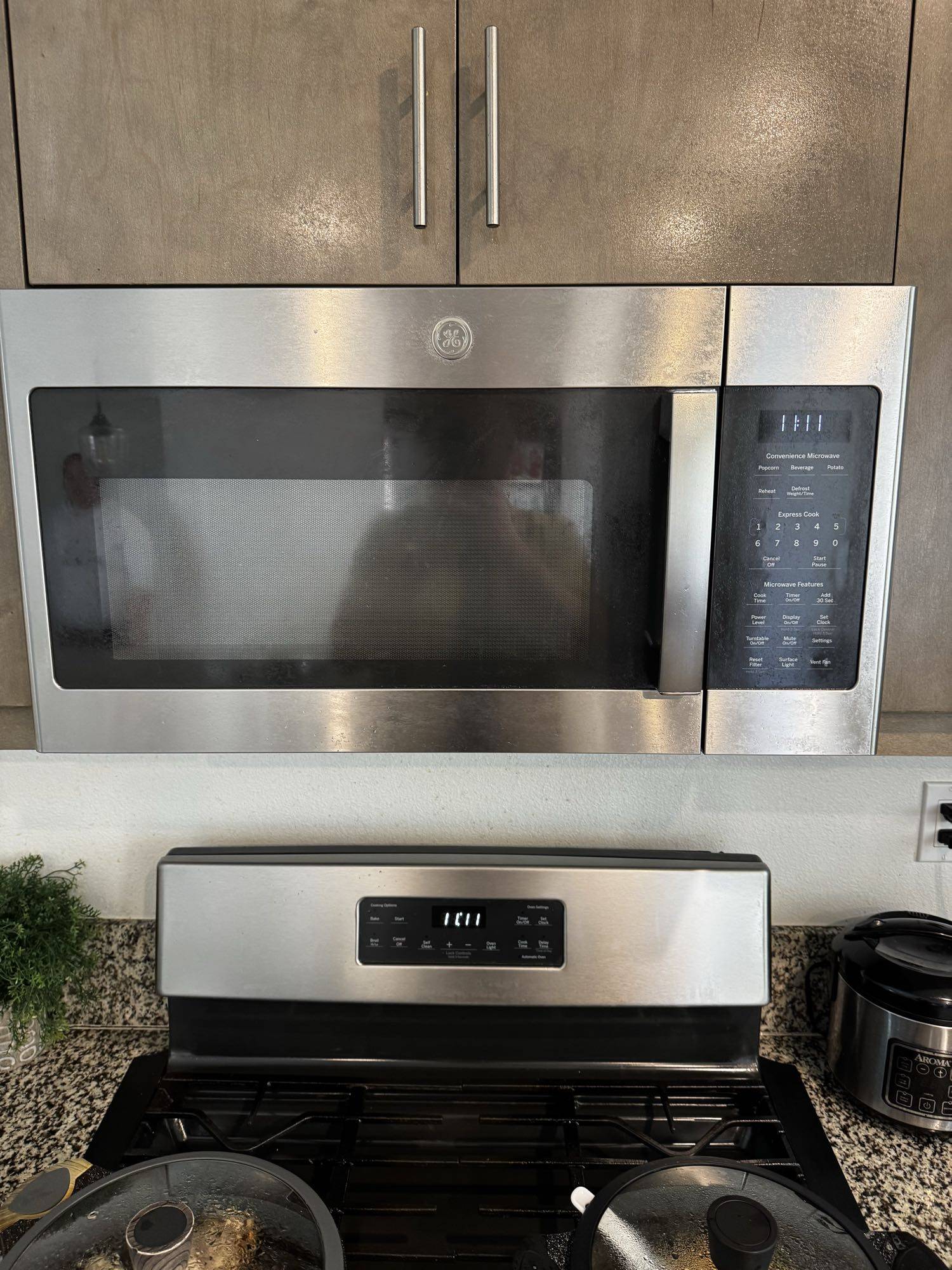
It is a common kitchen frustration: you wait for the beep, pull out your bowl of soup, and find the edges are scalding while the center remains a frozen tundra. You might think, I used the turntable, so why is it still cold?
While the rotating platter is designed to solve the problem of “hot spots,” it isn’t a cure-all. When a microwave heats unevenly despite rotation, the issue usually lies deep within the physics of microwave energy or a mechanical failure in the power distribution system.
The Science of Standing Waves
To understand what is going wrong, we have to look at how a microwave works. Inside the cabinet, a device called a magnetron generates electromagnetic waves. These waves bounce off the metal walls, creating a pattern known as standing waves. In a standing wave pattern, there are “nodes” (areas of low energy) and “antinodes” (areas of high energy). If your food stayed perfectly still, the antinodes would burn holes in one spot while the nodes left other areas untouched. The turntable is meant to move the food through these high and low-energy zones to average out the heat. However, if the wave pattern itself is distorted or the distribution mechanism is failing, rotation won’t be enough to save your leftovers.1. The Stirrer Blade Failure
In many mid-to-high-end microwaves, there is a component called a stirrer blade. Located behind a cover (usually on the ceiling or side wall), this metal fan-like device reflects the microwaves in various directions as they enter the oven cavity. Its job is to “stir” the energy so the standing wave pattern is constantly shifting. If the stirrer motor burns out or the blade becomes obstructed by grease buildup, the waves remain static. Even if your food is rotating, it may only be passing through a single, fixed “hot ring,” leaving the center and outer edges completely inconsistent.2. Magnetron Degradation
The magnetron is the heart of your appliance. Over time, magnetrons can lose efficiency. If the magnetron is “pulsing” inconsistently or failing to produce a coherent stream of radiation, the energy density within the cavity drops. This often manifests as food taking longer to heat and appearing significantly more uneven than it did when the unit was new.3. Faulty Waveguide Cover
Look at the small, cardboard-like rectangle on the inside wall of your microwave. This is the waveguide cover. Its job is to let energy through while protecting the internal electronics from steam and food splatters. If this cover is charred, cracked, or coated in a thick layer of carbonized food, it can arc or deflect the microwaves. This disruption messes with the intended “throw” of the energy, causing it to concentrate in one corner of the unit.4. Coupling and Turntable Slippage
Sometimes the problem is mechanical. If the turntable coupler (the plastic piece under the glass tray) is cracked or worn, the tray might appear to be spinning when empty, but stalls the moment you put a heavy plate on it. If the rotation is jerky or intermittent, the food spends too much time in a “dead zone,” leading to those dreaded cold spots.5. Density and Physics: The Limits of the Machine
We must also consider the “skin effect.” Microwaves generally only penetrate about 1 to 1.5 inches into food. If you are heating a dense, thick block of casserole, the waves only hit the outside. The center relies entirely on conduction—heat moving from the outside in. If the power level is set to 100%, the outside overcooks before the heat has a chance to migrate to the center.How to Fix the Distribution
If you suspect your microwave has a power distribution issue, there are a few steps you can take:- Clean the Interior: Ensure the waveguide cover and the area around the stirrer fan are free of grease.
- The Water Test: Place several small cups of water in a circle around the edge and one in the center. Microwave them for one minute. If one is boiling and another is lukewarm, your wave distribution is definitely compromised.
- Professional Calibration: Components like magnetrons and stirrer motors involve high-voltage capacitors that can hold a lethal charge even when unplugged. These are not “DIY-friendly” repairs.