
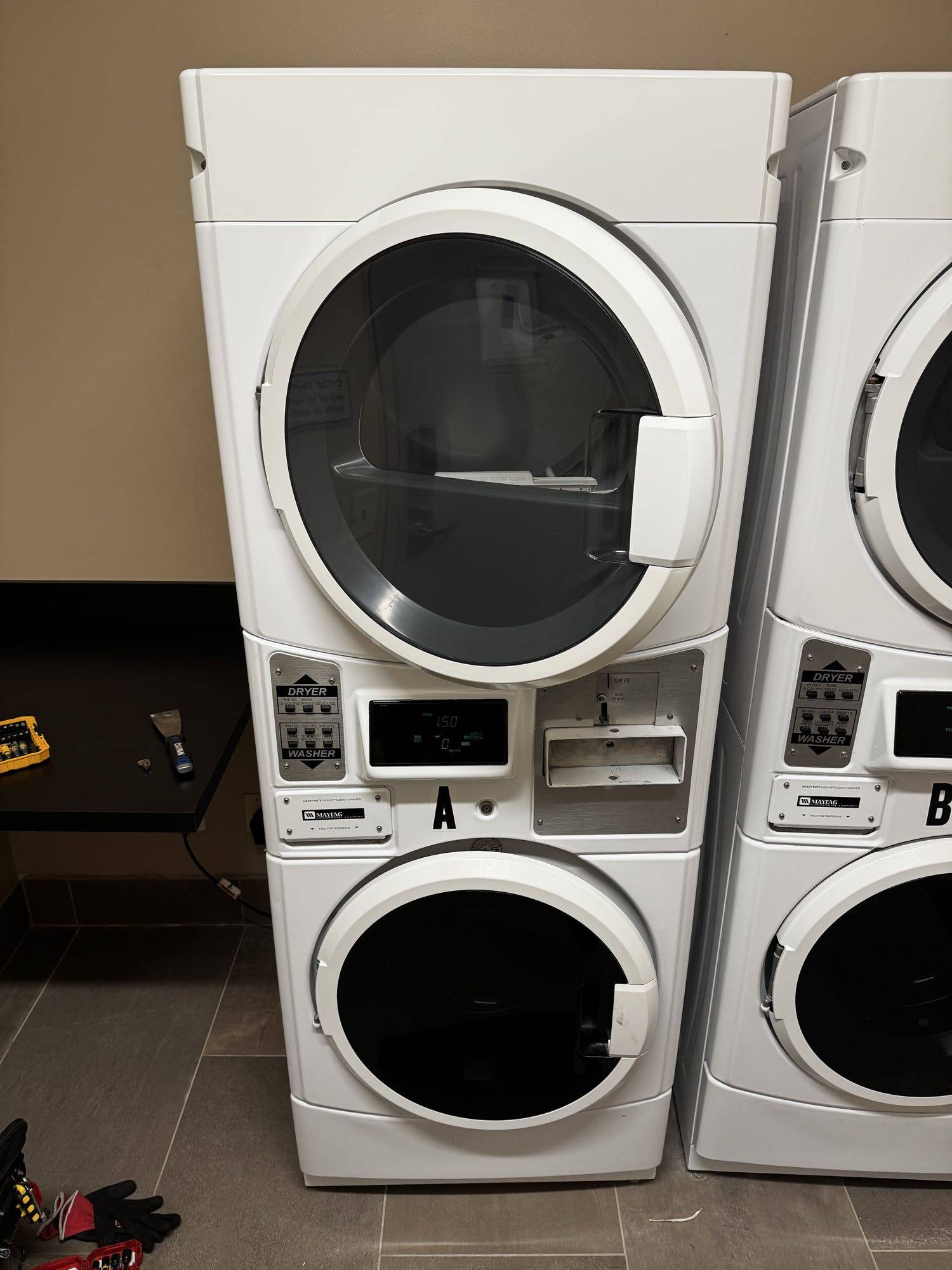
When freshly washed clothes come out with a thin layer of gritty residue, the issue is rarely about detergent alone. Fine sand-like particles usually point to contamination inside the washer or problems with filtration and water flow. Left unchecked, the buildup tends to worsen over time and start affecting fabric quality, odor, and overall washing performance.
Where the particles come from
The most common source is residue that accumulates inside the drum system. Over time, detergent, fabric softener, lint, and minerals from hard water combine into a sticky layer. Small pieces of this layer break off during cycles and settle back onto clothing. Another frequent cause is the drain filter. If it becomes clogged with lint, hair, or small debris, the washer cannot properly flush out waste water. Particles then circulate back into the drum instead of exiting through the drainage system. Water supply can also play a role. In some households, especially where plumbing is older or has sediment issues, tiny mineral or rust particles enter the washing machine along with incoming water. These deposits are often mistaken for sand. Worn internal components are another factor. Rubber seals, hoses, and aging gaskets can slowly degrade, releasing fine fragments during operation. In some cases, a deteriorating drum bearing or corrosion inside metal parts can also contribute to gritty residue.Hidden buildup inside the machine
Modern washing machines are designed to be efficient with water, but that efficiency can also lead to internal buildup. Low-water cycles may not fully flush detergent and debris. Over time, this creates a layer inside the drum, behind the rubber seal, and within the pump housing. Once this layer becomes unstable, it breaks into small particles during agitation and spin cycles. These particles are light enough to stick to wet fabric, especially cotton and synthetic blends. A similar effect happens in the detergent drawer. If it is not cleaned regularly, hardened detergent can flake off and enter the wash cycle.Signs the issue is getting worse
At first, the residue may appear only on dark clothing or in small amounts. As buildup increases, you may notice:- Gritty texture on multiple loads
- Reduced freshness after washing
- Visible debris inside the drum or rubber seal
- Slower draining or unusual cycle behavior
- Persistent odor even after cleaning cycles
What can be checked at home
Basic maintenance can help reduce minor buildup:- Cleaning the drain filter regularly
- Running a hot maintenance cycle without laundry
- Wiping the rubber door seal after each wash
- Using the correct amount of detergent to avoid residue buildup
- Checking pockets for sand, dust, or small debris before washing
When professional service becomes necessary
If particles keep appearing after cleaning cycles, the issue is likely inside areas that are not easily accessible without disassembly. Technicians typically inspect:- Drain pump and filter housing
- Internal hoses and circulation pathways
- Drum seal and bearing condition
- Water inlet system for sediment
- Hidden buildup behind the drum assembly