
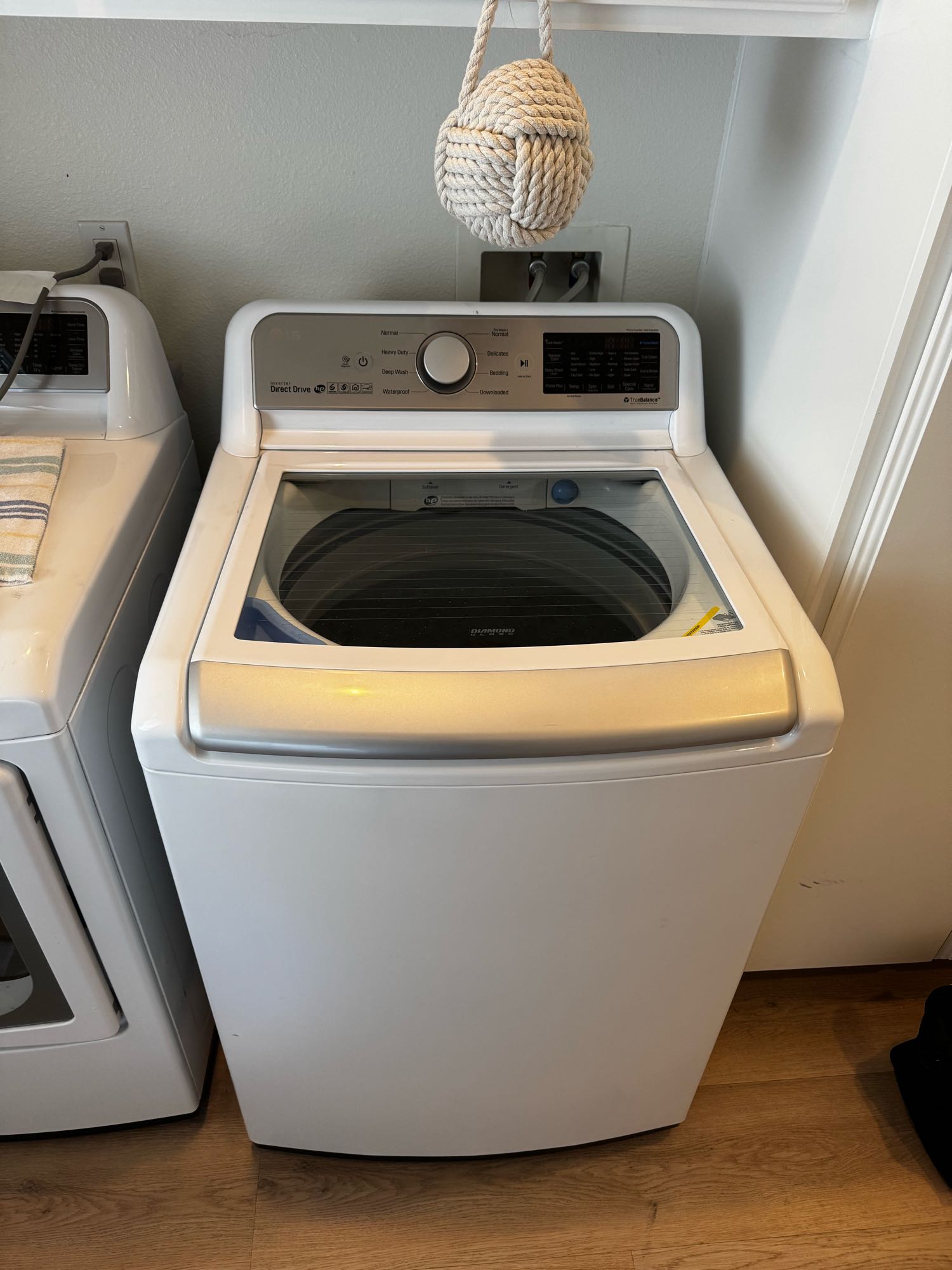
Finding detergent residue on clothes after a completed wash cycle is more than a cosmetic problem. White streaks, sticky patches, or powder trapped inside fabric fibers usually indicate that the washing machine is not rinsing correctly. In many cases, the issue develops gradually and becomes noticeable only after multiple loads begin coming out less clean than expected.
One of the most common causes is low water pressure. Modern washing machines rely on a steady water supply to dissolve detergent completely and flush it out during rinse cycles. If the incoming water pressure is too weak, detergent may stay inside the dispenser tray or remain trapped in the drum instead of fully circulating through the laundry.
Low pressure can happen for several reasons. A partially closed water valve behind the washer is a simple possibility, but clogged inlet filters are far more common. Small mesh screens inside the water inlet hoses collect sediment, rust, and mineral buildup over time. As debris accumulates, water flow decreases and rinse performance suffers. Homes with hard water often experience this issue sooner because mineral deposits build up faster inside both the hoses and the internal valve system.
Another possible source of detergent residue is a malfunctioning detergent dispenser. Front-load and high-efficiency machines use controlled water flow to flush detergent from the tray at specific stages of the cycle. If the dispenser becomes blocked with hardened detergent, fabric softener buildup, or mold residue, water may not pass through correctly. As a result, detergent stays inside the compartment or enters the drum unevenly.
Liquid detergent can also create problems when too much is used. Many homeowners assume extra detergent means cleaner clothes, but modern machines are designed to work with smaller amounts. Excess detergent creates more suds than the washer can rinse away efficiently. The remaining soap sticks to clothing fibers, especially towels, dark fabrics, and thick materials like hoodies or blankets.
Using the wrong detergent type is another factor. High-efficiency washers require HE detergent specifically formulated for lower water usage. Standard detergent creates excessive foam, which interferes with rinsing and leaves residue behind. Even if the machine appears to complete the cycle normally, soap may remain trapped inside the fabric.
Cold water washing can contribute as well. Some powdered detergents do not dissolve fully at lower temperatures, particularly during short cycles. Undissolved particles may settle on clothing and appear as white streaks after drying. Switching to liquid detergent or selecting a warmer cycle can sometimes reduce the problem.
In certain situations, the issue points to internal component failure. A weakening water inlet valve may open inconsistently, limiting water entering the drum. Pressure sensors can also send inaccurate readings to the control board, causing the washer to use insufficient water during rinse cycles. If the machine ends cycles unusually quickly or fails to fill properly, professional inspection is recommended.
Drainage problems may also mimic detergent residue issues. If dirty water is not fully pumped out before rinsing begins, detergent and debris can recirculate back onto clothing. A partially clogged drain pump or kinked drain hose often causes this condition. Homeowners sometimes notice longer drain times, unusual pump noises, or standing water remaining inside the drum after the cycle ends.
Ignoring detergent residue can eventually affect both clothing and the appliance itself. Soap buildup inside fabrics attracts dirt more quickly and may irritate sensitive skin. Inside the washer, detergent accumulation encourages mold growth, unpleasant odors, and additional blockage within hoses and internal components.
Several maintenance steps can help prevent the problem:
- Clean the detergent dispenser regularly
- Inspect and rinse inlet hose filters
- Avoid overloading the drum
- Use the correct amount of HE detergent
- Run periodic cleaning cycles with washer cleaner
- Check water supply valves for proper flow