
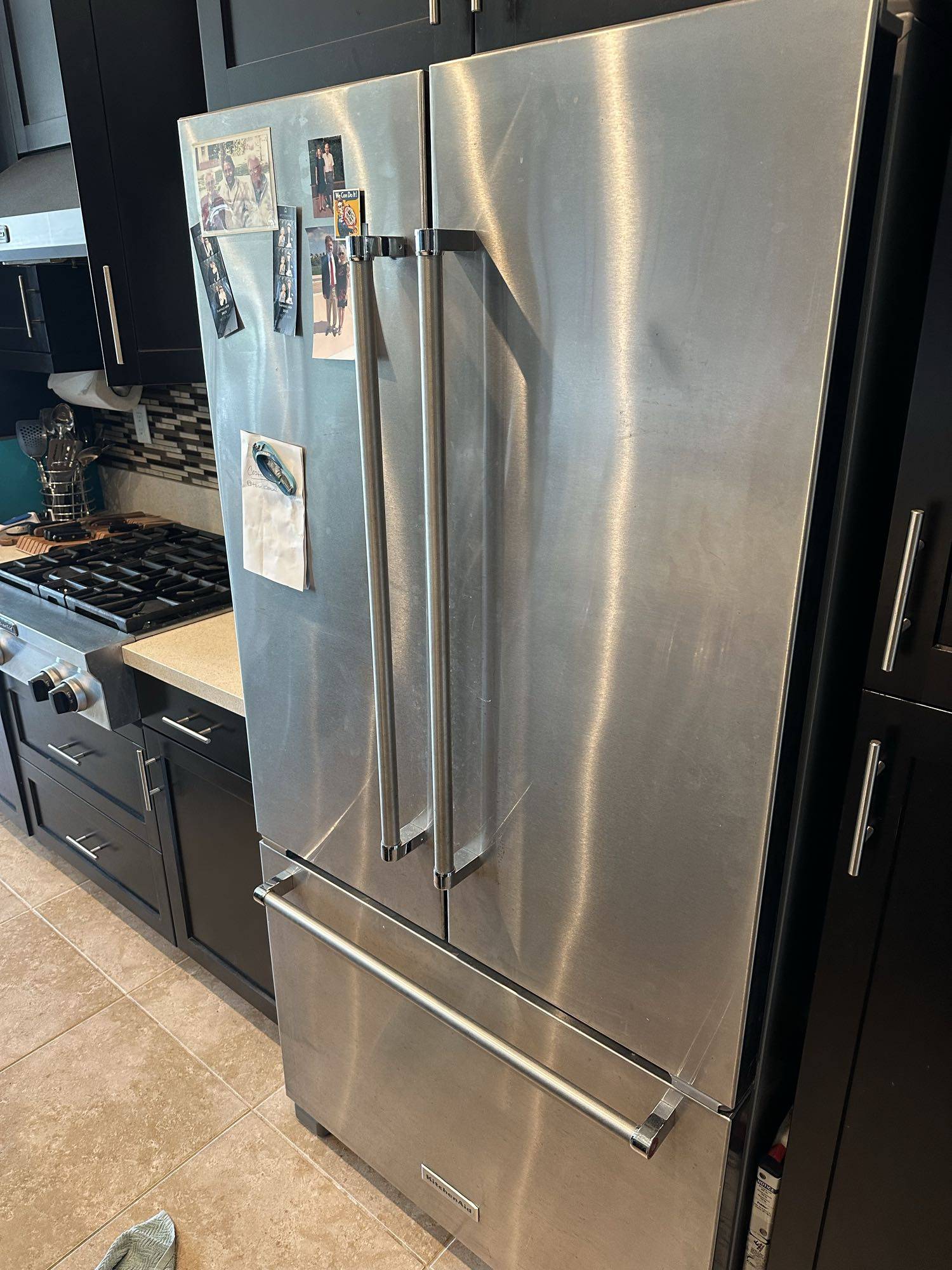
A refrigerator door should close securely with minimal effort and remain tightly sealed. If you notice that the door pops open slightly after you close it, even for just a second, it is a sign that something is interfering with the sealing process. While many homeowners assume they simply didn’t shut the door hard enough, this behavior often points to air pressure changes, gasket alignment issues, or door adjustment problems.
Although the door may eventually seal itself, repeated partial openings can allow warm air into the refrigerator. Over time, this increases energy consumption, forces the compressor to run longer, and may affect food freshness.
Why the Door Pops Open
One of the most common reasons is a temporary change in air pressure. When you close the refrigerator door, the warm air inside is compressed. As that air cools rapidly, pressure changes occur inside the compartment. Modern refrigerators are designed to equalize this pressure quickly, but if the process is delayed, the door may briefly rebound before sealing completely. This is especially common after the refrigerator has been open for an extended period or when warm kitchen air enters the compartment.Dirty or Misaligned Door Gasket
The gasket is the flexible rubber seal that runs around the edge of the refrigerator door. Its job is to create an airtight seal between the door and the cabinet. If the gasket becomes dirty, twisted, loose, or begins to harden with age, it may not grip the refrigerator frame evenly. Instead of pulling the door closed, sections of the gasket may push against the cabinet and cause the door to spring back open. Small tears or worn corners can produce the same effect.Refrigerator Isn’t Level
A refrigerator should sit level, with many manufacturers recommending a slight backward tilt. This allows gravity to help the doors swing closed naturally. If the appliance leans forward because of uneven flooring or improperly adjusted leveling feet, the door may fail to latch completely. Even a small change in angle can make a noticeable difference in how securely the door closes.Overloaded Door Shelves
Heavy bottles, milk containers, or large condiment jars stored in the door increase its weight. Excessive weight can slightly shift the door downward over time, affecting hinge alignment. When this happens, the gasket may no longer contact the cabinet evenly, allowing the door to bounce open after closing.Hinge Wear
Door hinges support significant weight every day. After years of use, hinge pins, bushings, or mounting hardware may wear down. A worn hinge can allow the door to sag just enough to prevent a proper seal. The problem often develops gradually, making it difficult to notice until the door begins popping open regularly.Items Blocking the Door
Sometimes the cause is surprisingly simple. Food containers, large beverage bottles, freezer packages, or protruding shelves may prevent the door from fully closing. The obstruction may be slight enough that the door appears shut before slowly pushing itself back open. Always check that nothing inside the refrigerator extends beyond the shelf edges.Vacuum Effect Between Doors
On French-door refrigerators, one door may briefly move when the opposite door closes. This happens because the changing air pressure affects both compartments. A slight movement can be normal. However, if the second door opens enough to break the seal, the gasket, hinges, or alignment should be inspected.What Homeowners Can Check
Before scheduling a repair, perform a few simple inspections:- Clean the gasket with warm water and mild soap.
- Check for cracks, tears, or hardened rubber.
- Make sure food containers are not blocking the door.
- Verify that the refrigerator is level.
- Reduce excessive weight stored in the door shelves.
- Watch whether the door sags while opening or closing.
Why You Shouldn’t Ignore the Problem
Even if the door only opens slightly, warm air repeatedly entering the refrigerator creates additional workload for the cooling system. Over time, this may lead to:- Longer compressor run times
- Higher electricity bills
- Frost accumulation
- Temperature fluctuations
- Faster food spoilage
- Increased wear on cooling components