
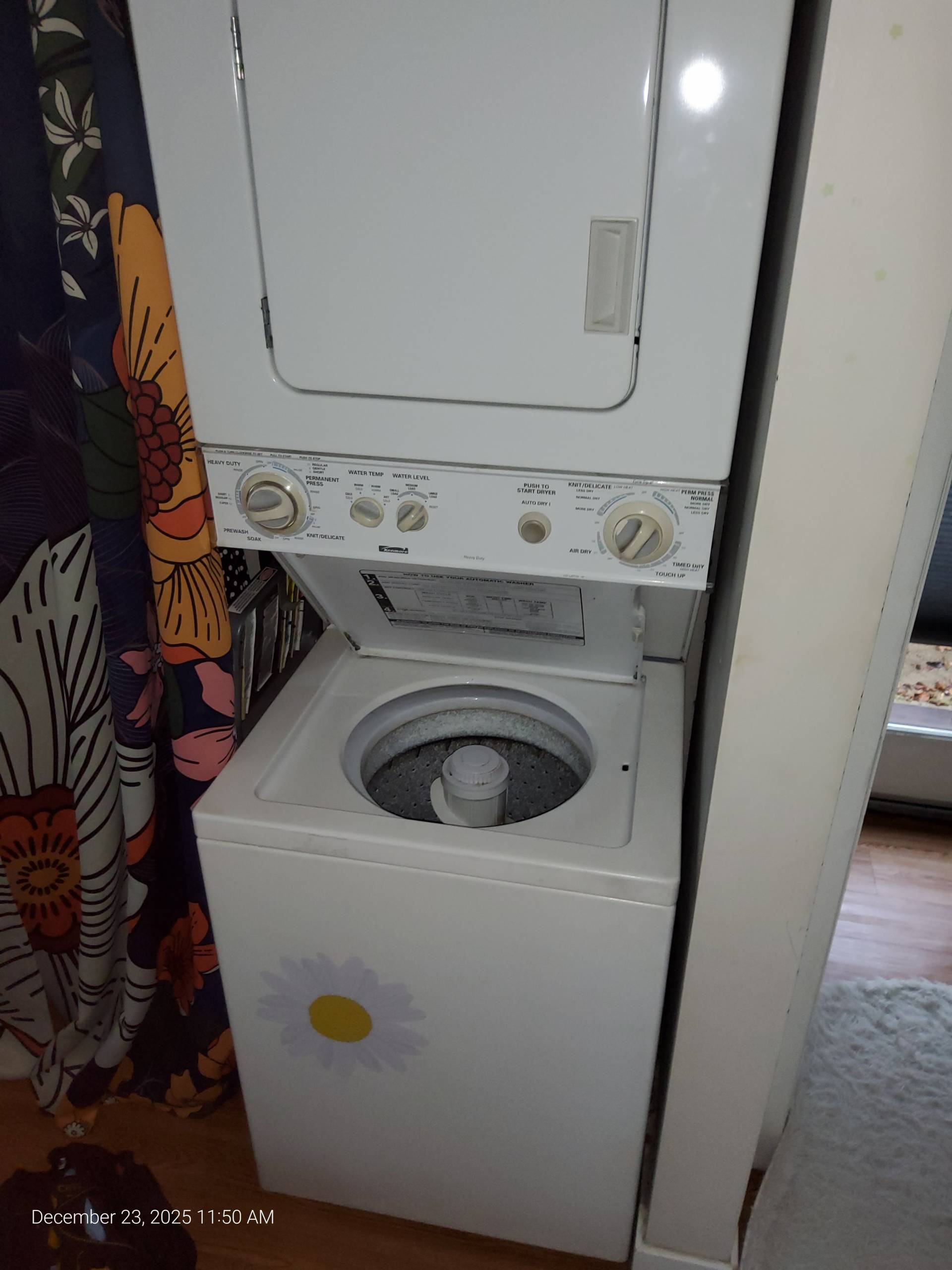
For most homeowners, the definition of a “working” washing machine is simple: the clothes come out clean and the machine doesn’t walk across the floor. If the load is balanced and the cycle finishes on time, we tend to ignore the minor details. However, an appliance’s health is often found in its acoustics. When your washing machine begins to produce a new, subtle sound during the high-speed spin cycle—even if the laundry looks perfect—it is usually the machine’s first attempt at communicating a mechanical failure.
Ignoring these auditory shifts is a common mistake. Because the machine still “works,” the incentive to call for a repair is low. But in the world of high-speed appliances, a slight change in pitch or a new rhythmic clicking is often the precursor to a catastrophic breakdown.
The Anatomy of the Spin Cycle
To understand why noise matters, one must understand the physics of the spin cycle. Modern washing machines, particularly front-loaders, spin at speeds ranging from 1,000 to 1,400 RPM. At these velocities, the inner drum is subjected to immense centrifugal force. To keep this movement smooth and quiet, the machine relies on a complex system of bearings, shocks, springs, and counterweights. When the machine is new, these components work in perfect harmony. The sound is a consistent, low-frequency hum. When that hum shifts—perhaps becoming a faint metallic whine or a dull rhythmic thud—it means that one of these precision components is no longer performing its job.Common Culprits Behind the “New” Noise
If your laundry is balanced but the noise has changed, the issue is rarely the clothes. Instead, it is likely one of the following internal components:- The Main Tub Bearings
- The Sound: A faint roar or a “jet engine” sound that gets progressively louder over several weeks.
- Worn Shock Absorbers
- The Sound: A subtle rhythmic thudding or “clapping” sound during the ramp-up to high speed.
- The Drive Pulley or Belt
- The Sound: A high-pitched squeal or a consistent “chirp” that matches the rotation of the drum.
- Debris in the Pump or Outer Tub
- The Sound: A scraping or clicking sound that persists even when the machine is empty.
The Cost of Procrastination
The primary reason to address these sounds immediately is financial. A washing machine is an interconnected system. When the bearings begin to fail, they create friction. This friction puts extra heat and strain on the motor. If the bearings seize completely, they can damage the drive shaft or even crack the outer tub. What begins as a $250 bearing replacement can quickly spiral into a $600 motor and tub rebuild—at which point, most homeowners are forced to scrap the machine entirely. By catching the “small sound” early, you are not just fixing a noise; you are extending the lifespan of a major investment.Diagnostic Steps for Homeowners
If you notice a change, perform these three quick checks:- The Manual Spin: With the machine off and empty, spin the drum by hand. It should move silently and smoothly. If you hear a “gravelly” sound, your bearings are gone.
- The 12-O’Clock Test: Push upward on the top edge of the inner drum. If there is significant movement or a “click” independent of the outer tub, the support spider or bearings are failing.
- The Filter Check: Clear out the drain pump filter. Sometimes a trapped object creates a harmonic vibration that sounds like a mechanical failure.