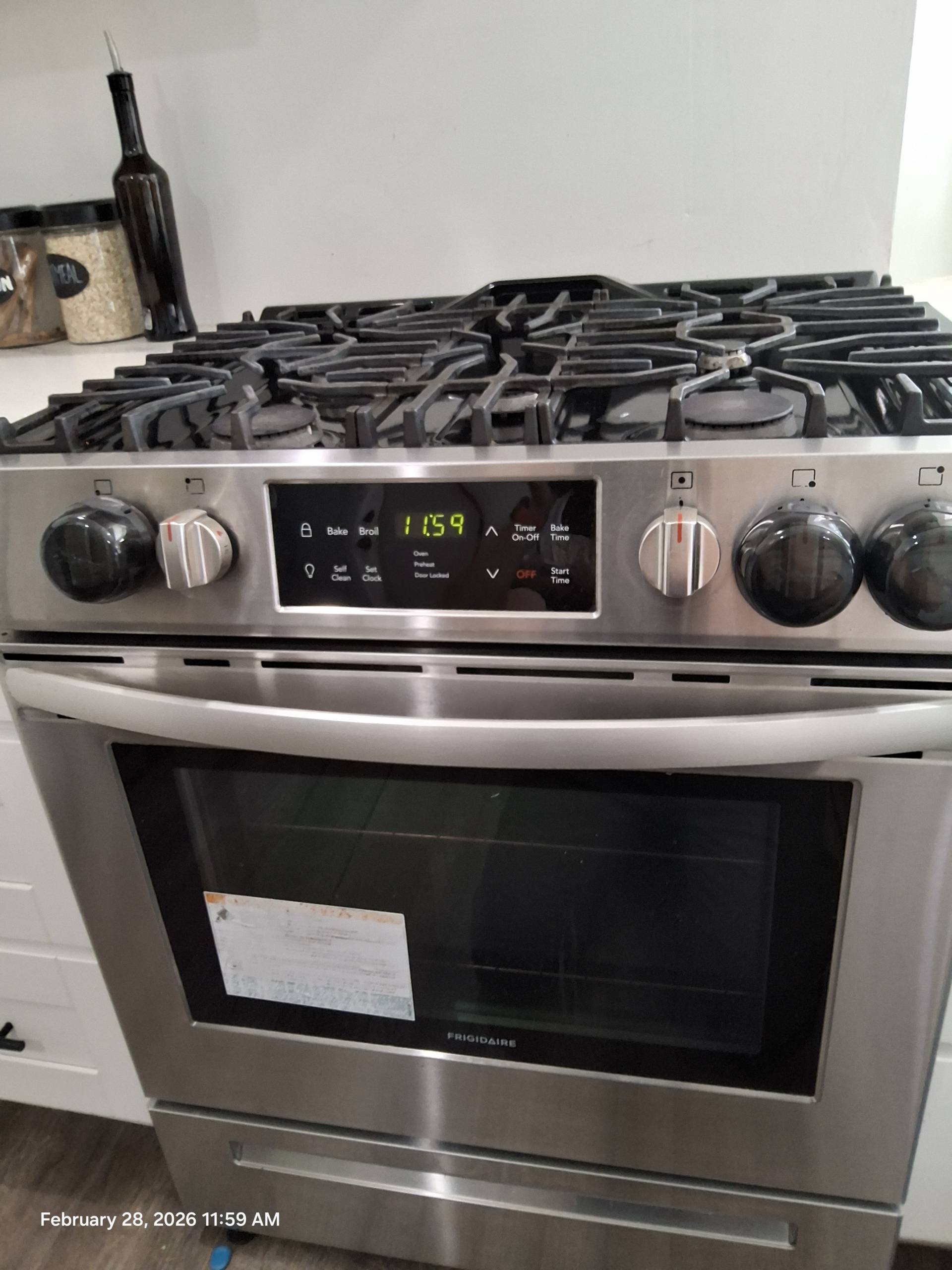
A gas stove burner should ignite with a steady, even blue flame around the entire ring within a second or two after turning the knob. When only part of the burner lights while other sections remain weak, delayed, or completely unlit, the issue usually points to restricted gas flow, buildup inside the burner ports, or incorrect burner cap positioning.
Uneven ignition is often ignored at first because the burner may still appear usable. However, delayed ignition and inconsistent flames can affect cooking performance, increase gas consumption, and place extra stress on ignition components over time. In some cases, the burner may produce clicking sounds repeatedly or create small flare-ups as gas accumulates before igniting.
Understanding the most common causes can help determine whether the issue requires simple maintenance or professional repair.
Clogged Burner Ports
One of the most common reasons for uneven ignition is clogged burner ports. The small holes around the burner ring distribute gas evenly before ignition occurs. Over time, grease, food particles, cleaning residue, and moisture can partially block these openings. When several ports become restricted, gas flow becomes uneven. As a result, one side of the burner may ignite immediately while the opposite side struggles to light or produces weak flames. Typical signs of clogged burner ports include:- Flames appearing only on one side
- Orange or irregular flame patterns
- Delayed ignition after turning the knob
- Clicking sounds continuing longer than normal
- Sections of the burner remaining unlit
Burner Cap Misalignment
Modern gas stoves rely on properly aligned burner caps to distribute gas evenly across the burner assembly. If the cap shifts out of position after cleaning or cooking, the gas-air mixture may no longer flow correctly. Even a slightly tilted cap can cause uneven flames, weak ignition, or gaps in the flame ring. This issue commonly occurs after:- Deep cleaning the cooktop
- Removing burner parts for washing
- Spills causing movement during cooking
- Improper reassembly after maintenance
Moisture Inside Burner Components
Water trapped inside burner assemblies after cleaning is another common source of ignition problems. Moisture can temporarily block gas flow or interfere with the igniter spark. Signs of moisture-related ignition issues include:- Clicking without ignition
- Weak or inconsistent flames
- Burners working normally after several hours
- Problems beginning immediately after cleaning
Dirty or Faulty Igniter
Gas burners depend on a spark igniter to light the gas safely. If grease or carbon buildup accumulates around the igniter electrode, the spark may weaken or fail to reach the gas evenly. A faulty igniter may cause:- Repeated clicking
- Slow ignition
- Ignition on only one side of the burner
- Intermittent operation
Gas Flow or Pressure Problems
Although less common, uneven burner ignition can also result from gas supply issues. Partial obstructions in gas lines, failing regulator components, or internal valve problems may reduce pressure reaching the burner. Symptoms may include:- Multiple burners showing weak flames
- Flames shrinking during use
- Inconsistent burner performance throughout the stove
- Difficulty maintaining stable heat levels
Why Uneven Burner Flames Should Not Be Ignored
Many homeowners continue using burners with uneven ignition because the stove still functions partially. However, ongoing operation under these conditions may create additional problems over time. Potential risks include:- Increased wear on ignition systems
- Excess gas buildup before ignition
- Uneven cooking temperatures
- Higher energy consumption
- Damage to burner components from overheating
Preventing Future Burner Problems
Routine maintenance helps reduce the likelihood of uneven burner ignition. Helpful maintenance practices include:- Cleaning spills promptly after cooking
- Avoiding excessive water during cleaning
- Ensuring burner caps are seated correctly
- Keeping burner ports free from grease buildup
- Scheduling professional inspections when ignition problems persist
When Professional Service Is Recommended
If cleaning and burner cap adjustments do not resolve the issue, professional diagnosis may be necessary. Persistent ignition problems can involve hidden issues within ignition systems, gas valves, regulators, or internal burner assemblies. A trained technician can safely inspect:- Ignition electrodes
- Burner alignment
- Gas pressure levels
- Control valves
- Internal gas flow components