
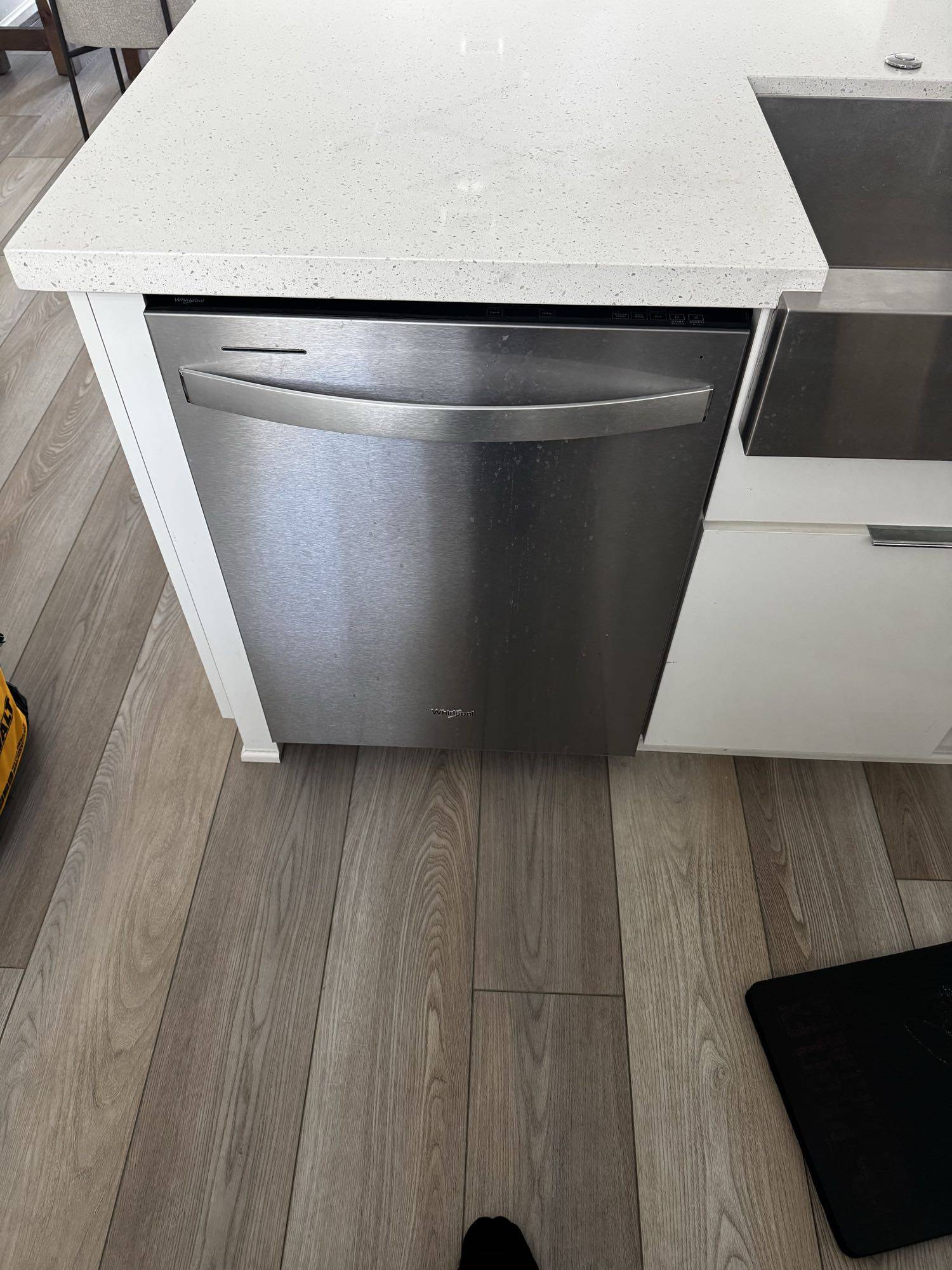
A dishwasher that refuses to start right after the door is closed usually points to a breakdown in communication between mechanical and electronic components. Modern units rely on precise signals: once the door shuts, the control board must confirm that it’s securely locked before allowing the cycle to begin. If that signal is missing or inconsistent, the machine stays idle.
The most common cause is a faulty door latch. This component does more than hold the door shut. Inside the latch assembly, there are small switches that send a “closed and locked” signal to the control board. If the latch is worn, misaligned, or obstructed by debris, those switches may not engage properly. As a result, the dishwasher behaves as if the door is still open, even when it looks fully closed.
Mechanical wear develops gradually. Repeated use can loosen the latch hook or shift its alignment. In some cases, the strike plate mounted on the frame bends slightly, preventing a tight connection. You may notice that the door requires extra pressure to click into place, or that it feels slightly loose. These are early signs that the latch system is no longer reliable.
Another issue involves the door switch itself. Even if the latch seems functional, the internal switch may fail electrically. This component is responsible for confirming closure at the circuit level. When it stops working, the control board never receives the signal needed to initiate a wash cycle. Diagnosing this requires testing continuity with a multimeter, which is typically handled during a professional inspection.
Control board faults are less frequent but more complex. The board processes all inputs, including signals from the latch and switches. If a relay, trace, or microcontroller pathway is damaged, the dishwasher may ignore a valid “door closed” signal. In such cases, the appliance might show no response at all, or it may delay startup unpredictably. Power surges, moisture exposure, and age contribute to these failures.
Wiring problems can create similar symptoms. The harness connecting the door components to the control board runs through a flexible section that moves each time the door opens and closes. Over time, wires can fray or break internally. This leads to intermittent contact, where the dishwasher starts only after multiple attempts or not at all. Because the damage is often hidden inside insulation, it’s not visible without disassembly.
User interface issues should also be considered. Some dishwashers include touch controls or delay-start settings that can be mistaken for a failure to start. If the control panel is unresponsive or registers inputs incorrectly, the unit may not begin a cycle even though the door latch works properly. Resetting the appliance or checking for locked control modes can help rule out simple operational errors.
There are a few practical checks you can perform before calling for service. First, inspect the latch area for food particles, detergent buildup, or foreign objects. Even small obstructions can prevent proper engagement. Next, close the door firmly and listen for a clear click. If the click feels weak or inconsistent, alignment may be off. You can also try gently lifting or pressing the door while starting the cycle to see if the machine responds.
However, deeper issues involving electrical components or internal wiring require proper tools and experience. Attempting to repair these parts without training can lead to further damage or safety risks. Dishwashers combine water and electricity in a confined space, so accurate diagnosis matters.
Ignoring the problem can make it worse. A failing latch may eventually stop working entirely, while a damaged control board can affect other functions such as water intake, heating, or draining. Addressing the issue early often reduces repair costs and prevents additional failures.
Professional technicians approach this problem systematically. They test the latch mechanism, verify switch continuity, inspect wiring integrity, and evaluate the control board’s response. This process isolates the exact fault instead of replacing parts at random. In many cases, replacing a worn latch or switch restores normal operation quickly.
If your dishwasher doesn’t start immediately after closing the door, the issue is rarely random. It reflects a breakdown in the system that confirms safe operation. Identifying whether the cause is mechanical, electrical, or electronic is key to resolving it efficiently.
For accurate diagnostic and reliable repair, contact San Diego Appliance Repair Service. Their technicians handle latch replacements, wiring repairs, and control board diagnostics using the right tools and procedures. Schedule a service visit to restore your dishwasher’s performance without unnecessary delays.
Contact us
(619) 719-5005
[email protected]