
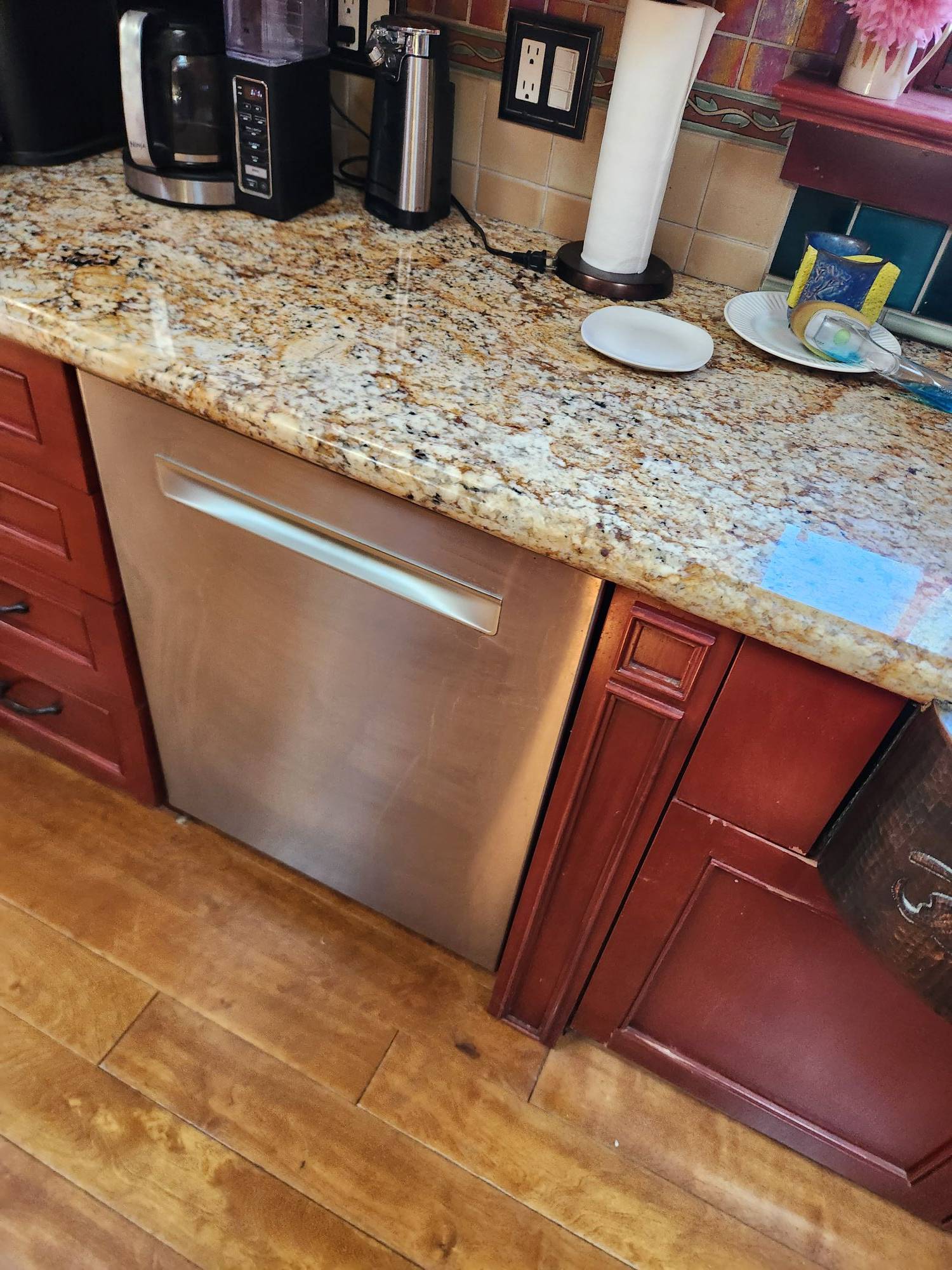
A dishwasher that starts producing a high-pitched whining sound during the wash cycle is usually signaling strain in the water circulation system. In most cases, the noise is linked to the pump assembly, where water is drawn in, pressurized, and pushed through spray arms. When something interferes with that process, the system continues working, but under resistance that creates a noticeable tone.
Understanding the source of the sound helps separate minor maintenance issues from developing mechanical failure.
Circulation pump under load
The circulation pump is responsible for moving water through the dishwasher at high pressure. When it operates smoothly, the sound is steady and low. A whining or rising pitch often indicates that the motor is working harder than it should. This can happen when the impeller is partially blocked by debris such as food particles, broken glass, or mineral buildup. Even a small obstruction can reduce flow efficiency, forcing the motor to compensate by increasing speed or torque. Over time, this extra load creates a consistent high-frequency sound during wash cycles.Worn pump bearings
Another common cause is wear inside the pump motor itself. Bearings support the rotating shaft and allow it to spin smoothly. When they begin to degrade, friction increases. The result is a sharp, continuous whine that becomes more noticeable as the cycle progresses. Unlike debris-related issues, bearing wear does not resolve after cleaning. It typically worsens gradually until the pump struggles to maintain pressure. If the sound is consistent across multiple cycles and does not change with load, bearing wear becomes a strong possibility.Impeller imbalance or damage
Inside the pump, the impeller is responsible for pushing water through the system. If it becomes cracked, warped, or partially obstructed, it can rotate unevenly. This imbalance creates vibration that translates into a whining or oscillating sound. In some cases, the noise appears only during specific phases of the cycle when water pressure increases. Damage to the impeller often follows long-term exposure to hard water deposits or accidental debris intrusion.Restricted water flow
A dishwasher relies on steady water intake to maintain pressure balance. If the inlet valve or filter is partially clogged, the pump may struggle to draw enough water. Low intake forces the pump to operate under cavitation conditions, where air bubbles form inside the system. This produces a distinct high-pitched noise that can sound almost electrical in nature. Checking filters and inlet screens is often a simple way to rule out this issue.Spray arm resistance
In some cases, the pump is functioning correctly, but resistance in the spray system creates backpressure. Clogged spray arms or mineral buildup in the nozzles can restrict water flow. When water cannot circulate freely, the pump compensates by increasing pressure, which may result in a whining sound. This type of noise often changes depending on load size or cycle stage.Electrical or motor strain
Less commonly, the issue may come from the motor windings or electronic drive system. If voltage regulation is inconsistent, the motor may operate at unstable speeds. This instability can create tonal fluctuations that resemble a whine or pitch shift during operation. These cases usually require diagnostic tools to confirm.How to identify the source
A few practical observations can help narrow down the cause:- If the noise starts immediately with water circulation, the pump is likely involved
- If it changes with different wash cycles, flow restriction may be the issue
- If it grows louder over time, internal wear such as bearings is more likely
- If cleaning filters reduces the sound, blockage is the probable cause
Risks of ignoring the symptom
A whining pump does not always mean immediate failure, but it usually indicates increased mechanical stress. Continued operation under these conditions can lead to:- Pump motor burnout
- Reduced washing efficiency
- Incomplete water circulation
- Higher energy consumption
Basic maintenance steps
Some issues can be resolved without disassembly:- Clean the dishwasher filter regularly
- Inspect spray arms for mineral buildup
- Check the inlet screen for blockage
- Run a cleaning cycle with dishwasher-safe descaler